By Andrew John Tucker, LCSW, CASAC-G
You have seen the ads. During the game, between plays, on your phone before you even open the app. “Bet $5, get $200.” “No sweat bet.” “Risk free.” You have watched friends disappear into it, or maybe you have felt the pull yourself. And at some point you started wondering: is anyone in charge here? Is anyone doing anything about this?
The answer is yes. It is complicated, it is slow, and the industry is fighting back hard. But something is moving.
How We Got Here
In 2018, the Supreme Court struck down the federal ban on sports betting. States rushed to legalize, chasing tax revenue. By 2024, Americans were legally wagering roughly $148 billion on sports annually. The apps that followed were fast, frictionless, and deliberately engineered for engagement. Deposit bonuses. Personalized AI promotions. In-play micro-betting on individual pitches and free throws. A market built to move faster than any regulator could keep up.
Now the consequences are impossible to ignore.
What the Data Shows
A 2025 study in JAMA Internal Medicine found that searches for gambling addiction help rose 23% nationally after legalization expanded, spiking 67% in Ohio and 50% in Pennsylvania. Researchers at UCLA Anderson and USC found bankruptcy risk rises 25 to 30% in states with legal online sports betting. The New York Federal Reserve estimated 30,000 additional bankruptcies per year and $8 billion in additional debt nationally tied to online wagering.
These numbers are now being read aloud in Senate hearings.
The Federal Push: Serious Proposals, Stalled Action
The most ambitious federal response is the SAFE Bet Act, introduced in 2025 by Senator Richard Blumenthal and Representative Paul Tonko. It would ban sports betting ads on television between 8 a.m. and 10 p.m. and during live broadcasts. It would prohibit language like “risk-free,” “no sweat,” and “bonus bet.” It would cap daily deposits, ban credit card funding, require income-based affordability checks on large wagers, prohibit AI-driven personalized promotions, ban in-play betting, and create a national self-exclusion registry run through SAMHSA.
After NBA players and a head coach were indicted on federal gambling fraud charges in October 2025, Tonko said the scandal was “the foreseeable consequence of the NBA’s decision to entangle the sport with a rapidly expanding, barely regulated gambling marketplace.”
The bill has not yet received a committee hearing.
A companion bill, the GRIT Act, would redirect 50% of an existing federal sports betting excise tax, roughly $150 million per year, toward addiction treatment and research through SAMHSA and the National Institute on Drug Abuse. It raises no new taxes. It also remains in committee.
Where the Real Action Is: State Legislatures
Because Congress is moving slowly, states are acting on their own. The results are uneven but significant.
Massachusetts is pursuing the most aggressive package in the country. Its Bettor Health Act would ban in-play and prop betting, cap daily wagers at $1,000, require operators to verify that bets do not exceed 15% of a bettor’s bank balance, raise the sports betting tax to 51%, and ban advertising during televised sports. It passed committee unanimously in March 2026.
Maryland passed a bill 132 to 0 in its House of Delegates that bans credit card deposits, codifies restrictions on college player prop bets, and requires operators to share betting data with university researchers studying problem gambling.
Kentucky’s legislature passed consumer protection legislation, saw it vetoed by the governor, and overrode the veto. The law raises the betting age to 21, bans props on college athletes, and blocks licensed operators from partnering with unregulated prediction market platforms.
New York has multiple bills moving that would ban in-play betting statewide, impose $5,000 daily caps, and restrict advertising aimed at minors.
Roughly 16 states have now banned prop bets on college athletes, driven in part by research showing that 12% of all online abuse directed at NCAA athletes traces directly to sports betting activity.
The Integrity Crisis That Accelerated Everything
Federal prosecutors charged 34 defendants in October 2025, including NBA players and a head coach, in what became known as Operation Nothing But Bet. Weeks later, two Major League Baseball pitchers were indicted for accepting bribes to manipulate specific pitches tied to prop bet outcomes. The FBI launched a dedicated Crime and Corruption in Sport and Gaming program in December 2025.
These cases gave legislators something concrete to point to. They are no longer arguing about hypothetical harm.
The Industry Is Spending to Protect Itself
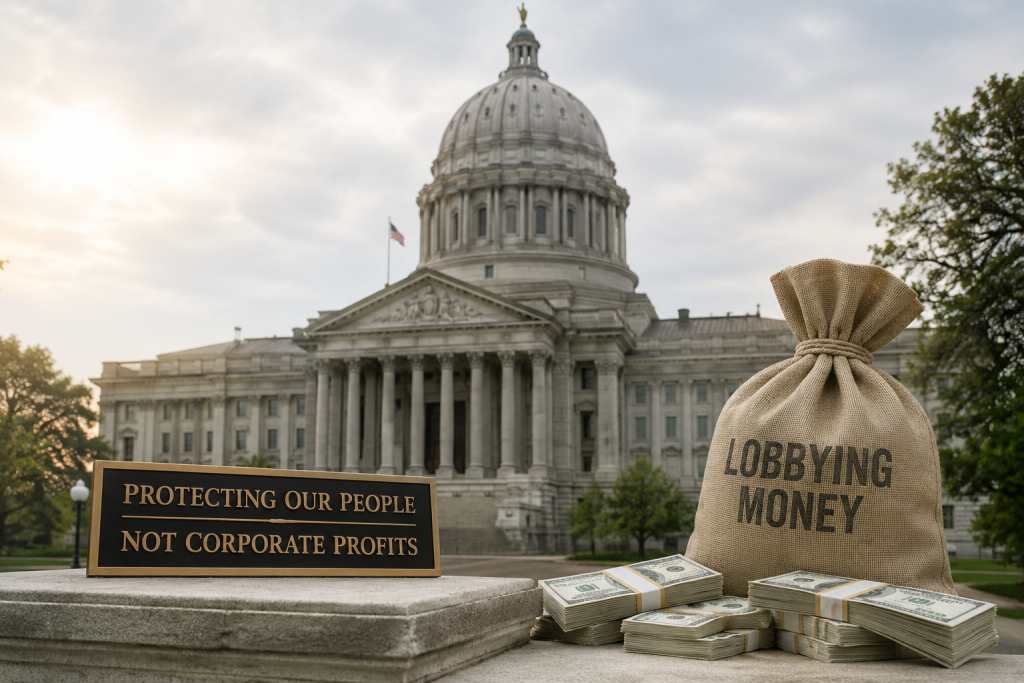
The American Gaming Association spent nearly $3 million on federal lobbying across 2025 and into 2026. FanDuel increased its federal lobbying spend roughly sevenfold. DraftKings nearly tripled its spend. Both companies hired firms with direct ties to the current administration. DraftKings and FanDuel together, along with Fanatics, created a $41 million super PAC for the 2026 election cycle.
Knowing this matters. Legislative progress on this issue is being contested at every level by an industry with enormous resources.
What This Means If You Are Struggling
Gambling Disorder is a recognized clinical diagnosis with strong treatment outcomes. The same reward pathways involved in substance addiction are active in problematic gambling. What is happening in state capitals and congressional hearings is an acknowledgment, finally, that this industry was built to be hard to walk away from. That is not a character flaw. That is by design.
Help exists now, before legislation catches up.
If anything in this article resonates with you and you’d like to explore it further, I offer Individual Therapy and a Wednesday Morning Men’s Group. Visit me at www.addictiontherapynyc.com to learn more or schedule a consultation.